- Economy & Markets, Growth & Innovation

Consumer and small business deposits have grown in the first half of 2026, outperforming the flat growth recorded over the same period in 2025. However, complex challenges lie below the topline numbers.
In the June 2026 edition of ProSight’s State of U.S. Deposits series, ProSight Research leaders Tom Hoscheidt and John Rountree were joined by Equifax IXI Network chief strategy officer Ian Wright for a deep dive into the data. Their rigorous analysis highlights the trends, opportunities, and strategic considerations facing banks in a competitive, evolving, and rate-sensitive deposit market. Here are five key takeaways from their presentation:
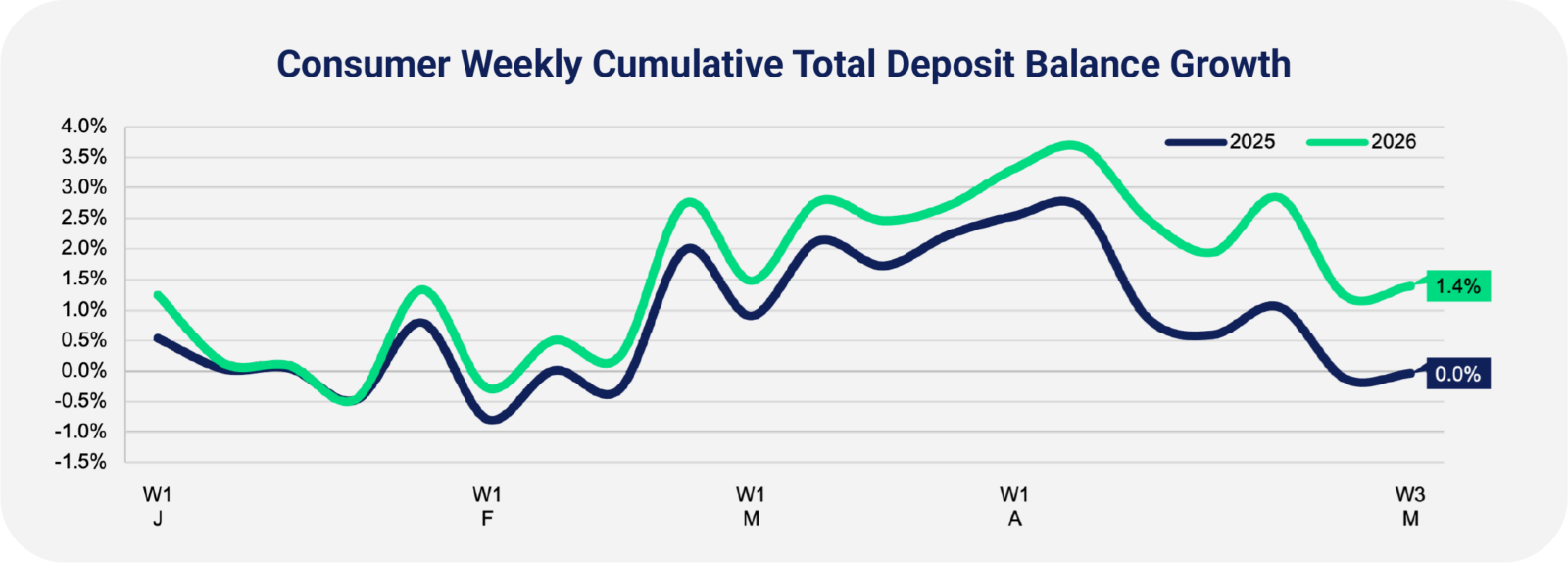

Consumer and small business deposit growth is outpacing 2025, but the unsettled question of where interest rates are heading will determine whether that strength carries through to year-end.
If the Fed Funds rate holds near its current 3.50% to 3.75% range, expect year-end consumer and small business growth of 1.5% to 2.0% and 2.0% to 2.5%, respectively. If rates ease toward 3.25% to 3.50% soon, expect higher year-end consumer and small business growth of 2.0% to 2.5% and 2.5% to 3.0%, respectively.
A rate increase cannot be ruled out, given geopolitical tensions and their macroeconomic impacts, and would likely suppress deposit growth below the rate-hold case.
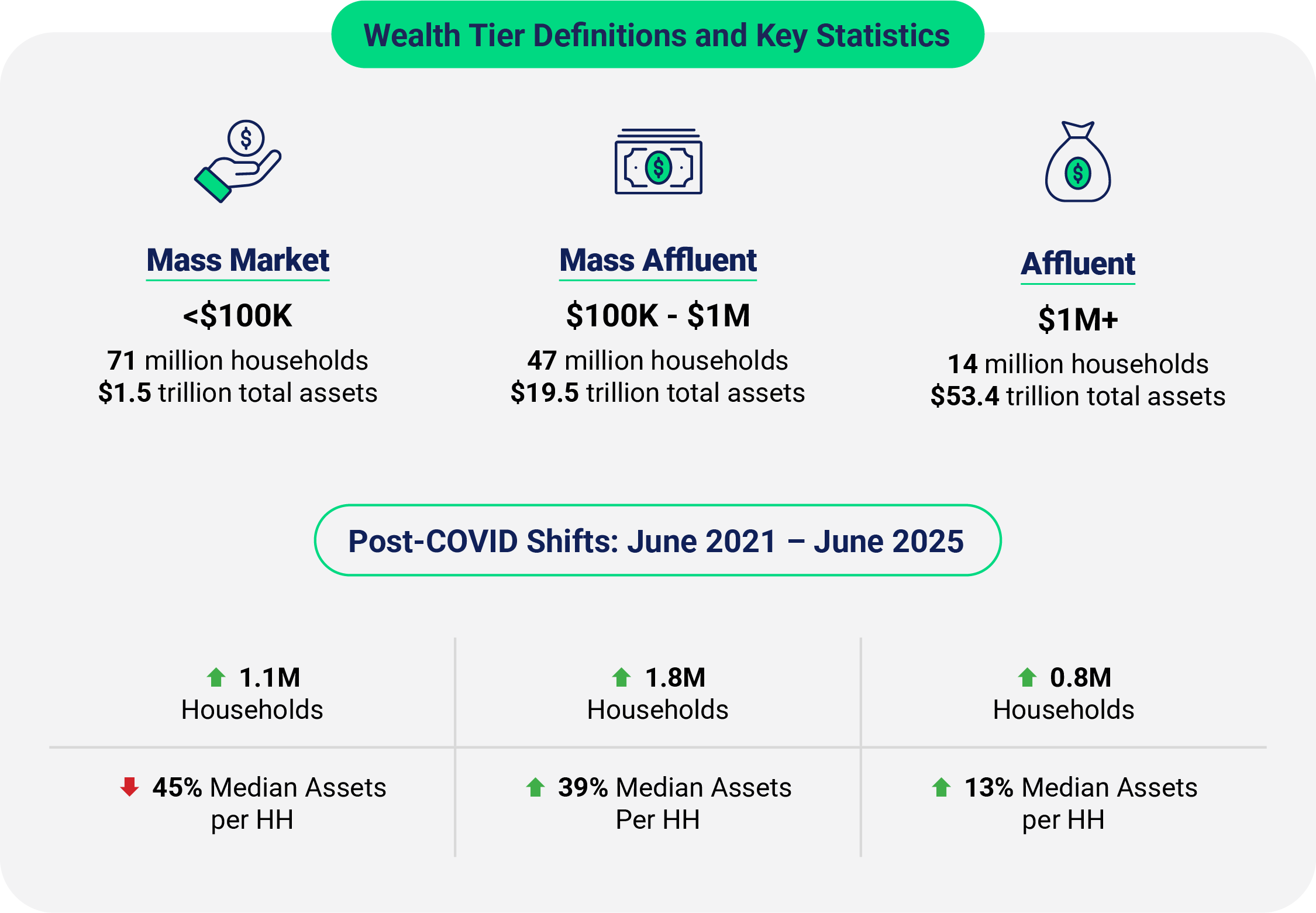
Investable assets have jumped 21% since 2021, with growth heavily favoring higher-wealth households exposed to a soaring stock market. The Mass-affluent tier ($100k to $1M in assets) has added 1.8 million households since June 2021, with median investable assets per household up 39%, while the Affluent tier (over $1M) has seen total wealth grow 29%, evidence that gains are concentrating among fewer households. (Wealth data: Equifax IXI Network.)

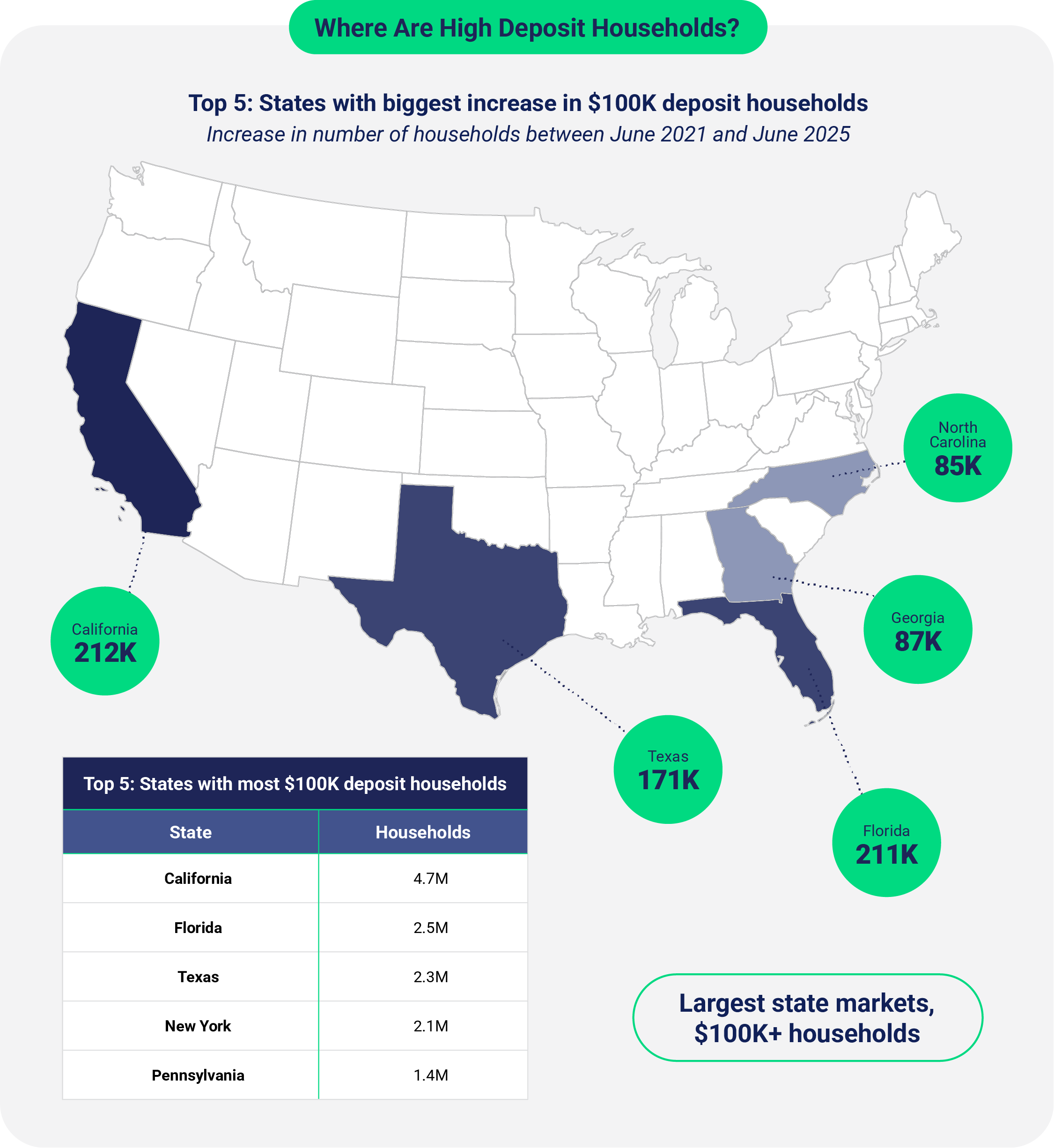
Several Southeastern states, including South Carolina, North Carolina, and Virginia, led the nation in median deposit growth since 2021, alongside fast-growing markets like Nevada. Many financial institutions have targeted these states, where growth in both median deposits and affluent households has been strong. However, given the market’s performance, competitive pressures have increased, and financial institutions need compelling differentiators to stand out. (Household deposit data: Equifax IXI Network.)
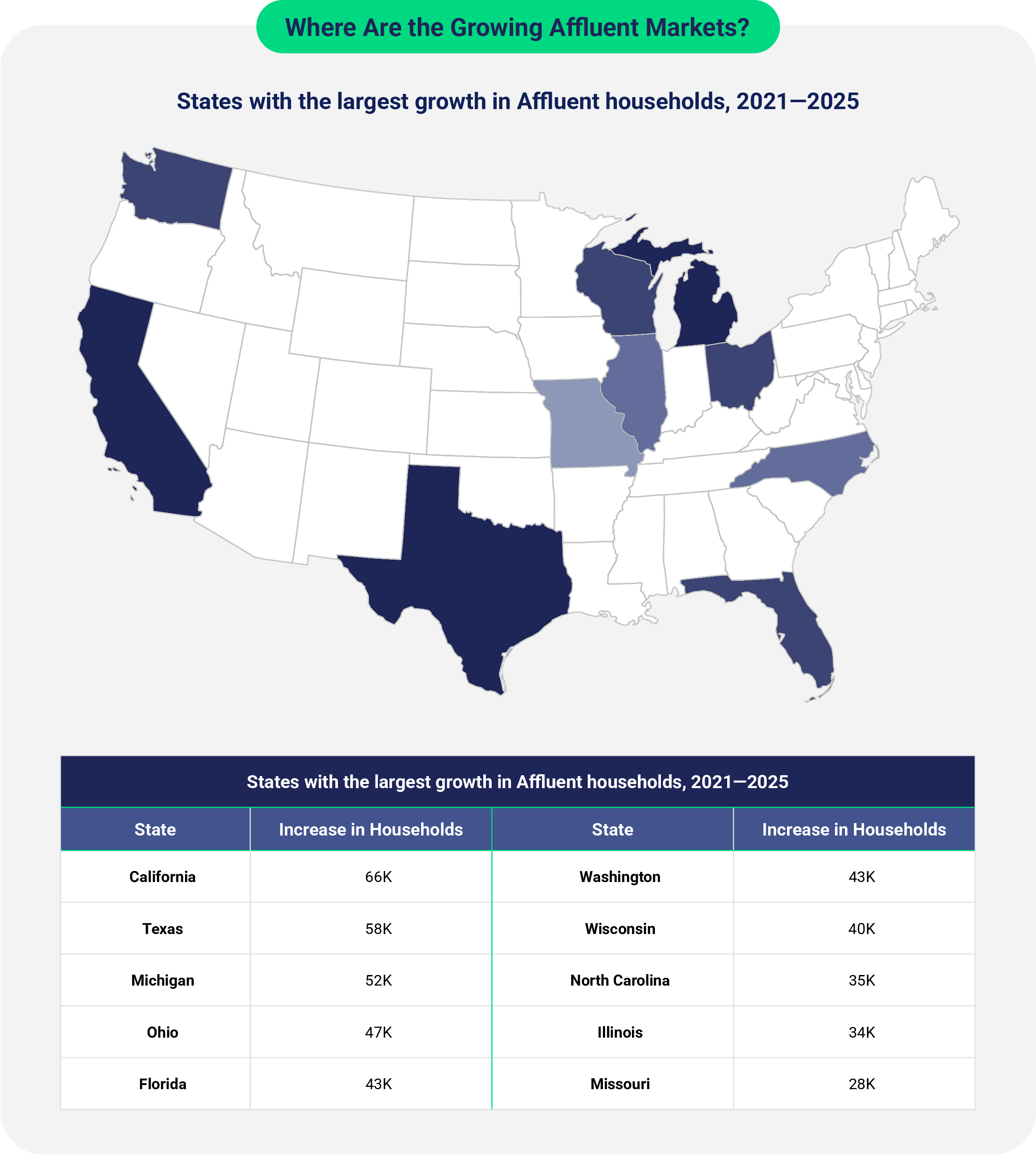
Several Midwestern states now rank among the top ten nationally for growth in affluent households since 2021. As an adjunct or alternative to Southeast-focused growth strategies, consider states like Michigan, Ohio, Wisconsin, Illinois, and Missouri.
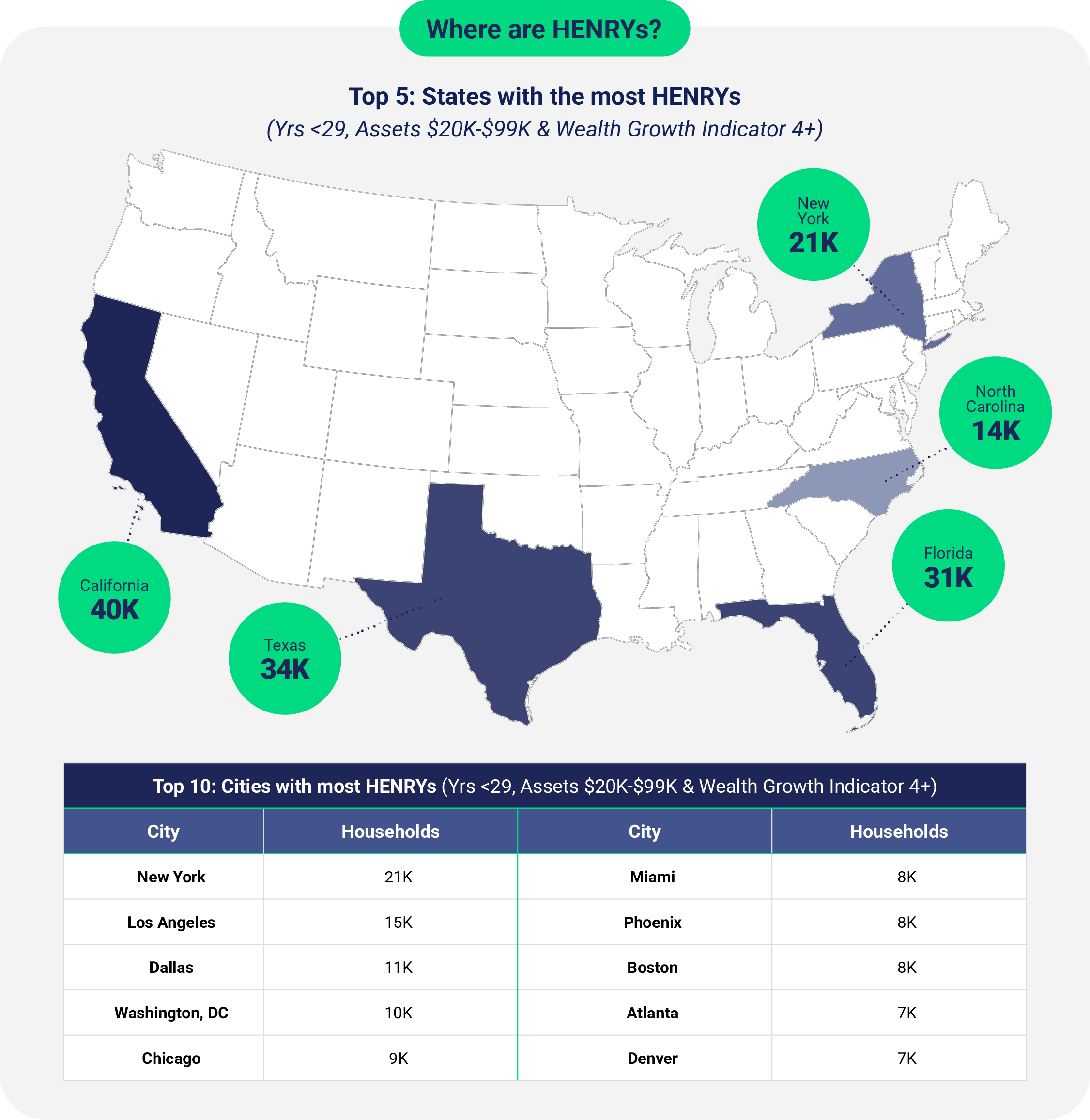
“High Earners, Not Rich Yet” (HENRYs) can deliver excellent lifetime value, so understanding where HENRYs are, and where they are emerging, is important. This is particularly true in markets where HENRY growth overlaps with other favorable dynamics. Beyond the “big five” states, North Carolina ranks among the national leaders in HENRY households. At the metro level, cities like Washington D.C. and Atlanta also stand out as notable HENRY markets worth watching.